


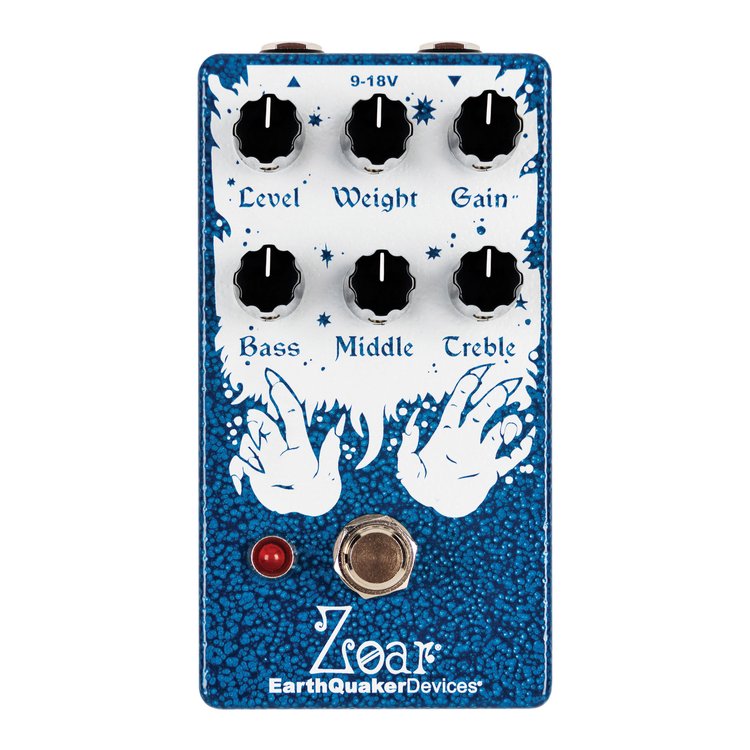
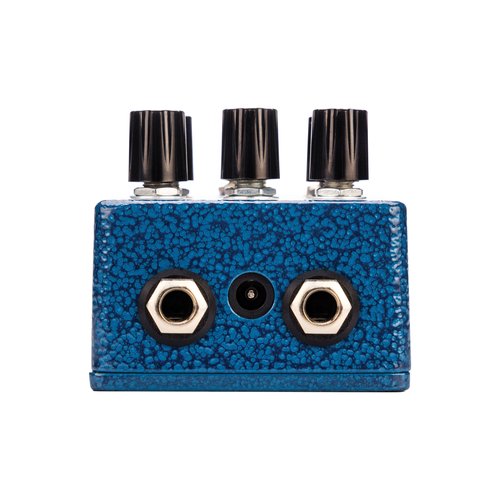
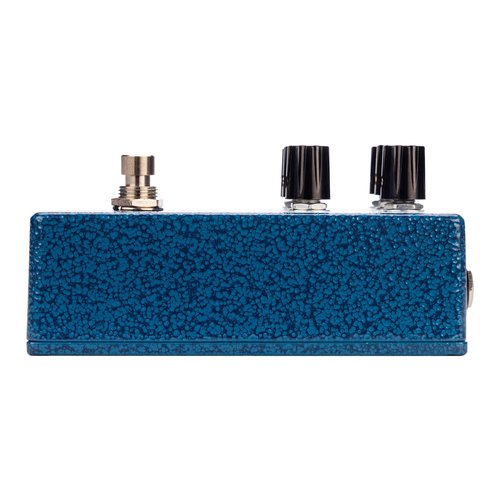
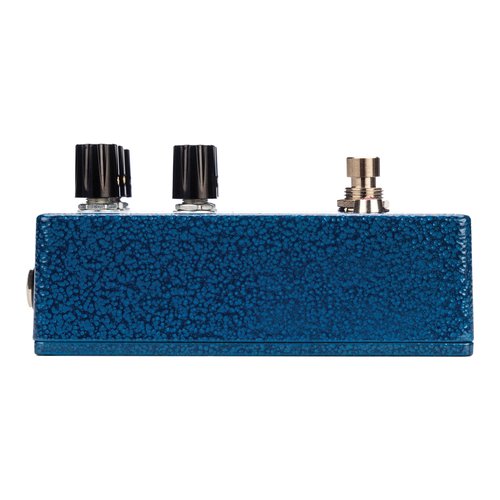
Zoar is a medium-to-high gain discrete distortion (all transistors; no op-amps or diodes here!) that has that touch-sensitive amp-like quality everyone is looking for. It has been finely tuned to create a highly tweakable, modern hi-fi distortion, but with the ghosts of old-school circuits to provide a grind that is both instantly familiar and delightfully unique. Want that defined sparkle and tension of an overdrive? This is for you. Want that low-to-medium gain fuzz that is perfect for drop-tuned guitars and basses? This is for you. Want to be able to tweak and control every nuance of your sound, from jangly edge-of-breakup to heavy, wall-exploding saturation? Then this pedal is made for you.
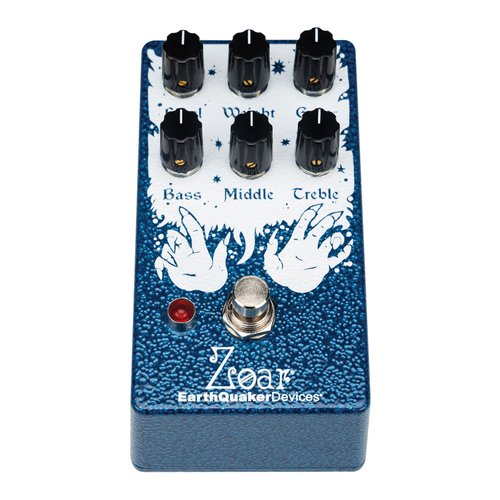
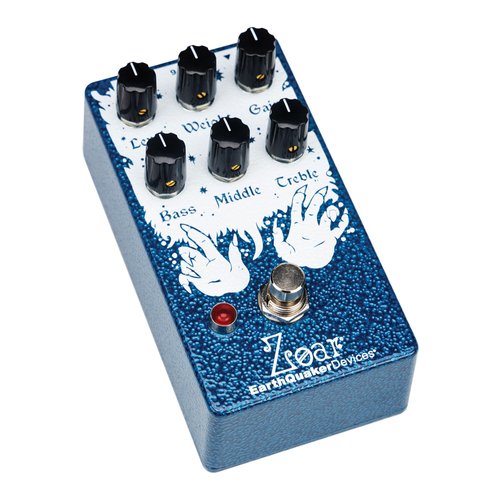
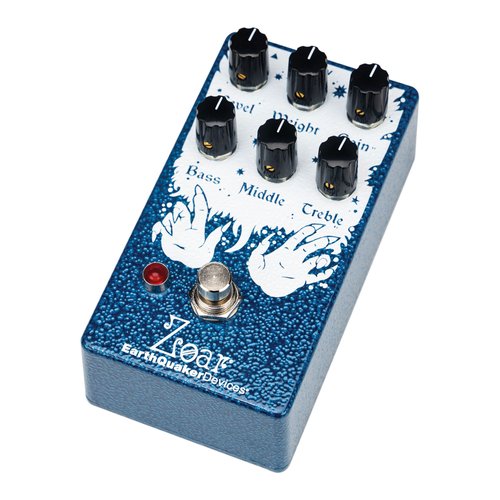
This meticulously crafted box features six knobs that allow you to truly customize your sound with Level, Weight, Gain, Bass, Middle, and Treble controls. The red LED light indicates when the distortion is engaged by the Flexi-Switch® footswitch.
The gain control on Zoar ranges from the edge of breakup to the edge of the cliff into a crunchy, grinding abyss. The character of the distortion is highly dependent on the setting of the Weight control as well as the type of pickup on your guitar, and it is further refined by the EQ section.
Tactile Controls
While its roots trace back to a very familiar past, the 3-band passive EQ has been finely tuned for modern sounds. Although this style of tone shaping seems simple at first glance, it is deceptively complex and highly interactive.
The 3-band EQ and gain controls offer almost unlimited options with great focus and sensitive precision, but the true power of Zoar is the Weight control. This control dictates the amount of low frequencies that pass into the circuit, thereby controlling the overall character of the pedal. From a simple clean boost to high-gain distortion via overdrive and crunchy Hi-Fi fuzz territory, this feature gives you everything.
The Level control reaches unity gain around noon, but this depends on where the other controls are set. In addition to controlling the output volume, it also plays a small role in controlling Zoar's voicing. By adjusting the Level control with any combination of EQ (by boosting frequency bands and cutting the output volume), you can achieve radically different curves that have the feel of a more traditional low-pass filter-style tone control.
Frequency Response
Snapshot of the frequency response with all controls set at noon.
Running Zoar at 18V
Want to take your sonic spirit to the next level? Try running Zoar at a higher voltage! Zoar can handle power up to 18V DC. Higher voltages will produce a different frequency response with more defined dynamics and a faster response. Powered at 18V, the range of clean sounds is expanded, dirty sounds become punchier with better note articulation, low frequencies are tightened, the Treble control will cover a wider spectrum without becoming harsh, and the output volume will almost double! The experience is not unlike plugging into a wall of high-wattage tube amplifiers!
Level: Adjusts the output volume.
Weight: This is an input frequency control that changes the voice and saturation of the distortion. Turning Weight clockwise allows more low frequencies to pass through. This increases the gain, allows lower frequencies to clip faster and can shift the tone of the pedal from tight distortion to a loose fuzz.
Gain: Turn clockwise to increase distortion. This adjusts the transistor bias. A little static sound when turning is completely normal.
Bass: Passive bass control, adjusts the low frequency content between 0 and 800Hz +/- 15dB.
Middle: Passive middle control, adjusts the midrange frequency content between 500Hz and 3kHz +/- 10dB.
Treble: Passive treble control, adjusts the high frequency content between 1kHz and 10kHz +/-15dB.