


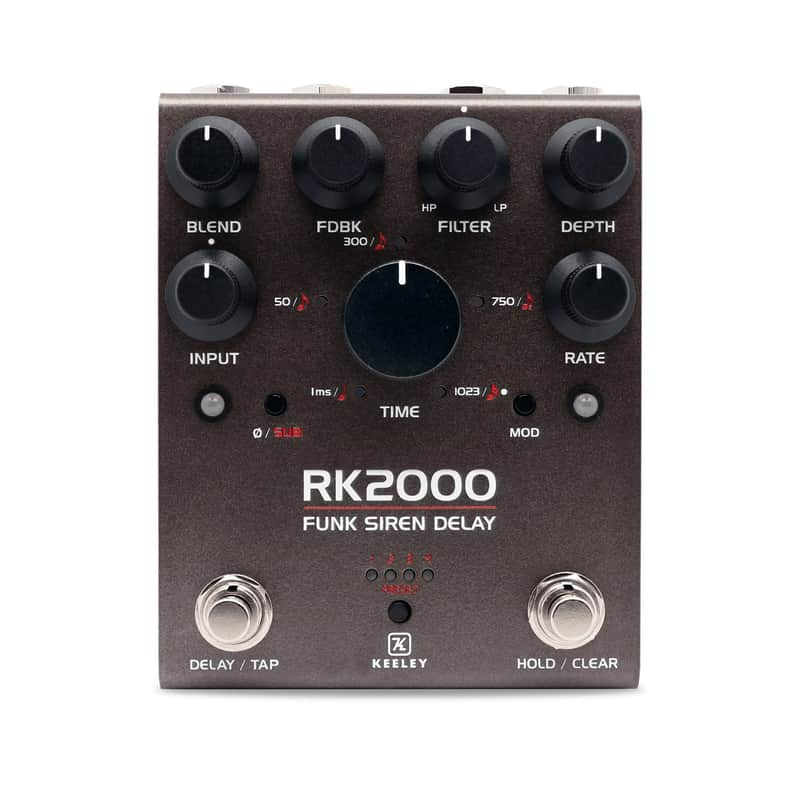
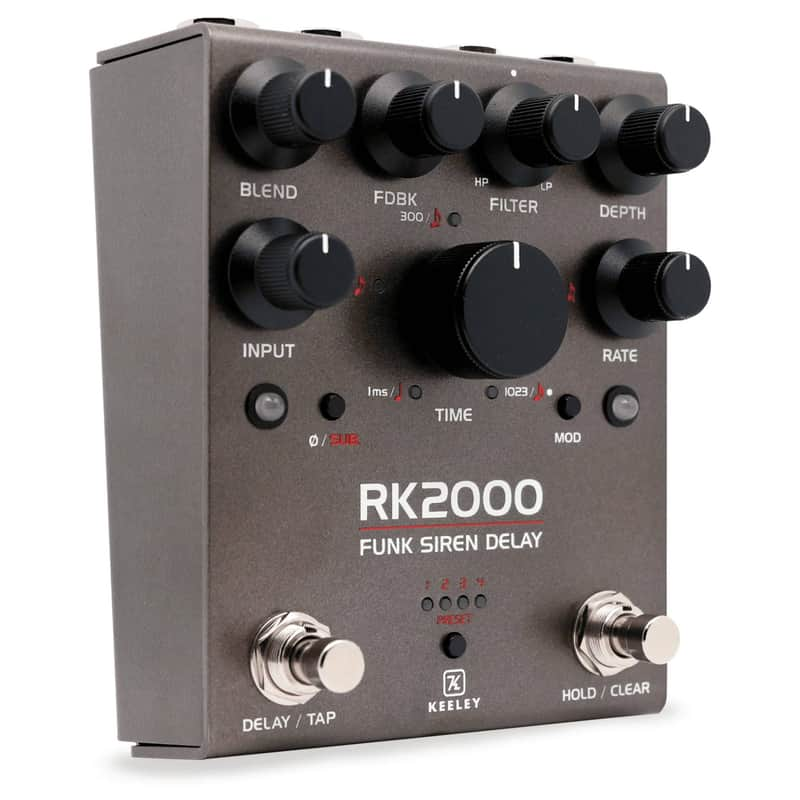
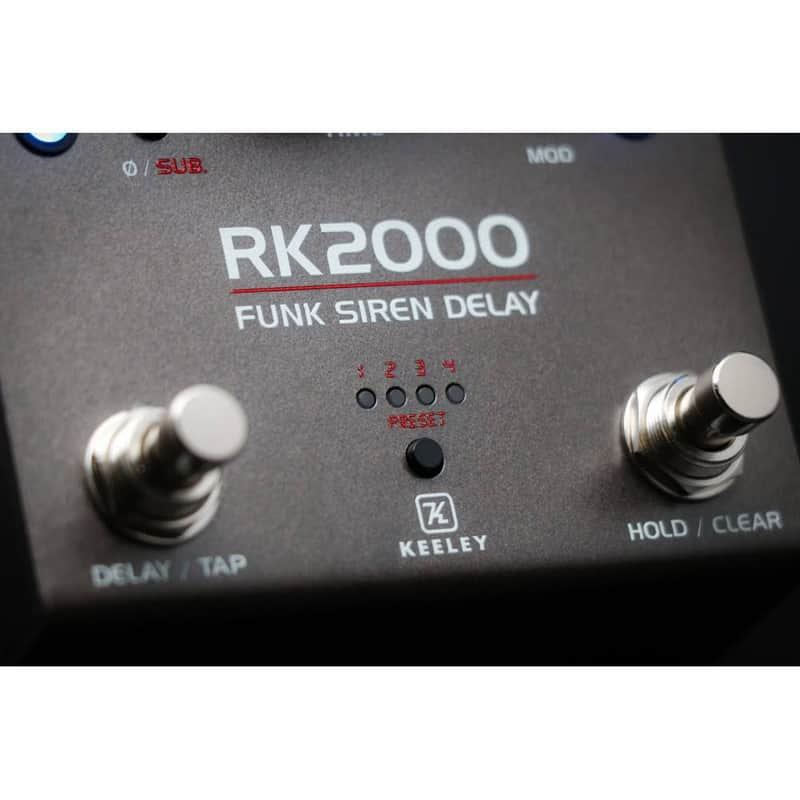
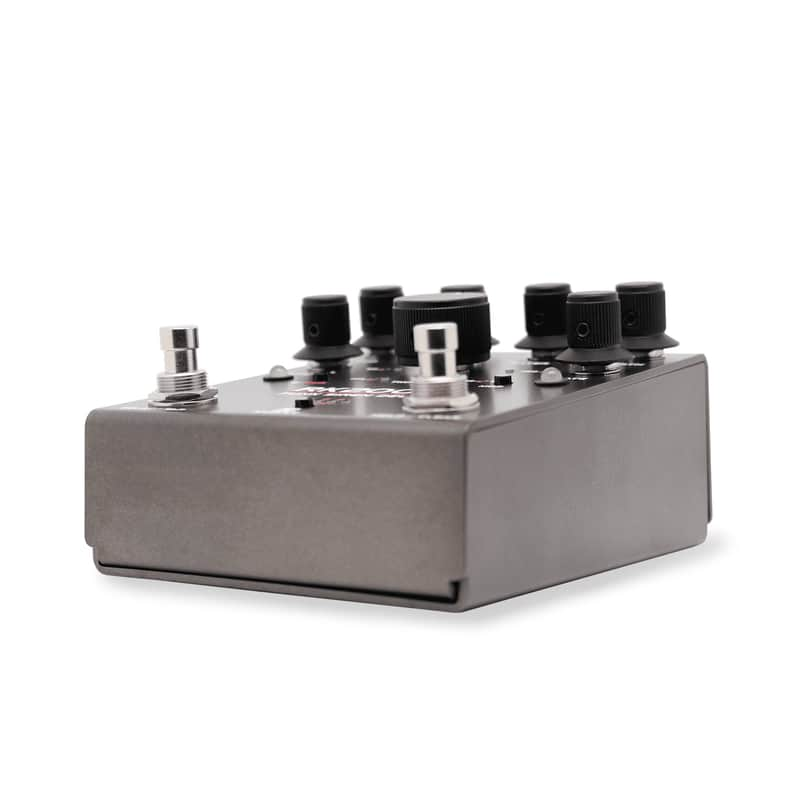
If you are a fan of Trey Anastasio, you surely know the DM2000 delay rack. Trey uses it to create an ambient loop called the "Funk Siren." In 1983, this device was considered the most over-engineered delay of its time. This unique delay, with its Hold and Mod functions, is now available for the first time in pedal format. Justin Stabler, Trey's guitar tech, requested the recreation of this vintage delay to replace units over 40 years old that had become unreliable. One of the most distinctive elements of this delay is its modulation section—so intense that it is compared to the effect of violently hitting the reel of a tape machine. The RK2000 Funk Siren Delay features presets, remote control of the Hold and Mod functions, expression pedal use on any parameter, ping-pong delays with pitch shift, and full MIDI control.
The RK2000 Funk Siren Delay is the very first pedal recreation of the legendary DM2000 rack. Designed to solve the reliability issues of 40-year-old vintage equipment, it faithfully reproduces the "Funk Siren" loops made famous by Trey Anastasio.
• Dramatic modulation: from light vibrato to an extreme "tape stop" effect
• Modern control: full MIDI integration, presets, and expression pedal compatibility
• Extended features: remote Hold/Mod switching and ping-pong delays with pitch shift
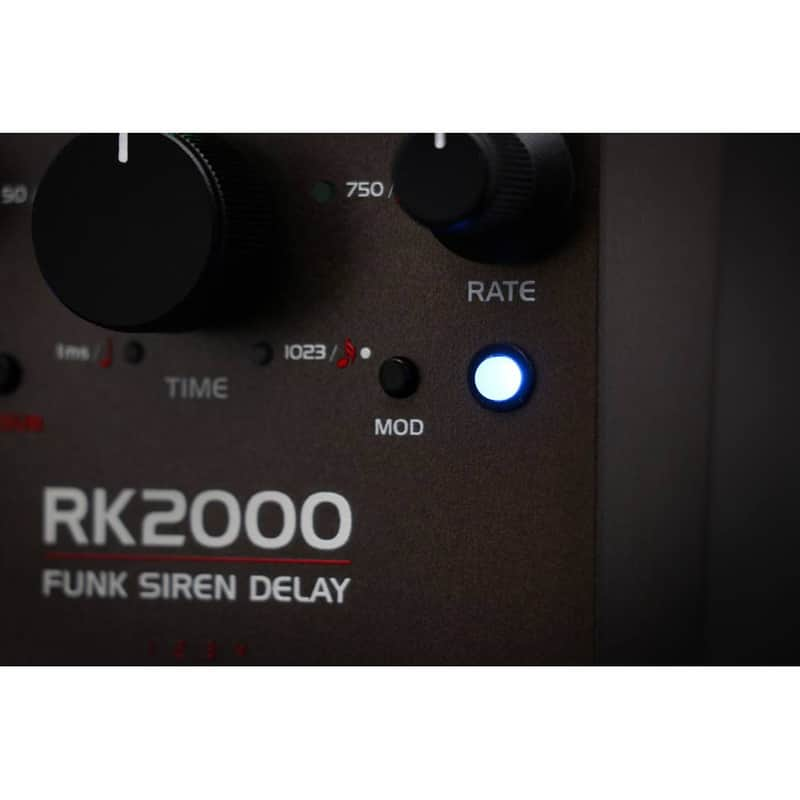
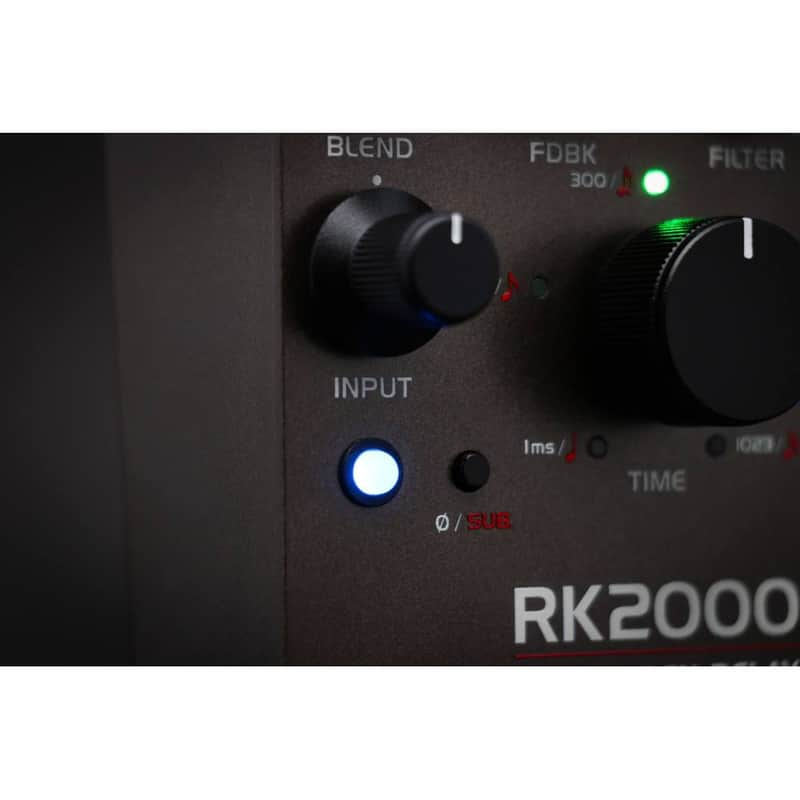
The Time knob controls the delay offset, with a range of 1 ms to 1023 ms, or allows for selecting tap tempo subdivisions and delay time.
Capture the legendary "Funk Siren" sound with the RK2000 Funk Siren Delay. Inspired by the iconic DM2000—used by Trey Anastasio to create his signature ambient textures—this pedal modernizes a 1983 classic. Developed at the request of Justin Stabler, it replaces temperamental vintage gear with rock-solid reliability. Rediscover that dramatic "tape stop" style modulation, enriched with presets, MIDI, expression pedal control, and ping-pong delays with pitch shift.
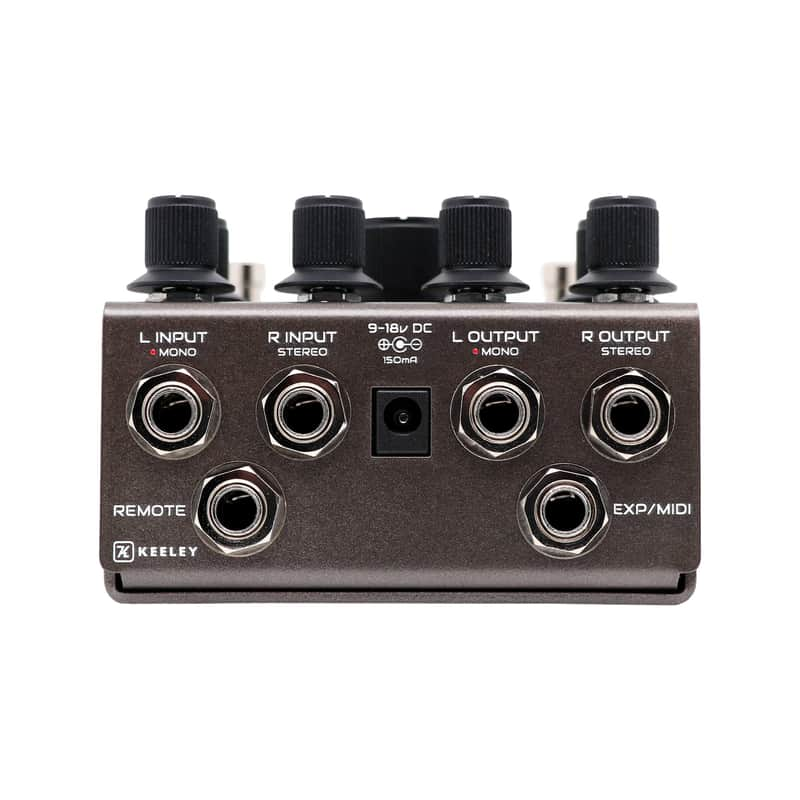
The RK2000 offers true stereo inputs and outputs, a remote control input, expression control, and full MIDI management. Power requirements: 9–18 V DC, 150 mA.